

Book Launch
This book examines food security, public health, equity, and global governance with a particular focus on India’s sociopolitical, economic, and agricultural challenges. Drawing on field research and policy analysis, it connects global, national, and local perspectives on food systems and distribution. It addresses critical concerns such as climate change, poverty, and gaps in public food distribution frameworks. Through an interdisciplinary approach, the volume proposes solutions to improve accessibility, sustainability, and governance of food security.

Book Launch
This UN volume, Long Walk of Peace: Towards a Culture of Prevention, authored by UNESCO Chair Professor Priyankar Upadhyaya, explores evolving global approaches to peacebuilding and preventive diplomacy. Launched at the UN Headquarters in Geneva, the work has received wide recognition from international diplomats, scholars, and institutions. The publication advances peace education and global cooperation as central pillars for fostering a sustainable culture of prevention.
Book Launch
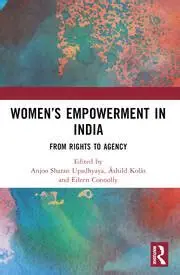
Women’s Empowerment in India: From Rights to Agency is a fresh contribution to the debate about agency and ownership as key aspects of empowerment, highlighting the experiences of women who defy dominant narratives and the diverse ways in which Indian women have struggled for empowerment, political voice and representation, and rallied against injustice.
Book Launch
This UN volume, Long Walk of Peace: Towards a Culture of Prevention, authored by UNESCO Chair Professor Priyankar Upadhyaya, explores evolving global approaches to peacebuilding and preventive diplomacy. Launched at the UN Headquarters in Geneva, the work has received wide recognition from international diplomats, scholars, and institutions. The publication advances peace education and global cooperation as central pillars for fostering a sustainable culture of prevention.
Book Launch
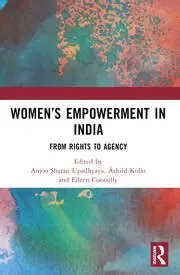
Women’s Empowerment in India: From Rights to Agency is a fresh contribution to the debate about agency and ownership as key aspects of empowerment, highlighting the experiences of women who defy dominant narratives and the diverse ways in which Indian women have struggled for empowerment, political voice and representation, and rallied against injustice.
After introductory remarks by two of the three editors, Anjoo Sharan Upadhyaya and Åshild Kolås, a panel convened to discuss the content and contribution of the book. The panelists which included Meera Khanna, writer, poet, and gender rights activist, Prof. Reshmi Kazi,Professor at the Department of Political Science, Jamia Millia Islamia, New Delhi and Rita Manchanda, feminist scholar and author, advocate of human rights, gender equality and peace in South Asia, was moderated by Manu Arya, senior advisor on communications and culture at the Royal Norwegian Embassy.

In Conversation with
Join us for an inspiring conversation with Mana Jampala, the 12-year-old founder of Voxa, an AI-powered receptionist transforming how small businesses manage customer interactions.
Discover her entrepreneurial journey, her passion for AI, and how she’s building innovative solutions at such a young age.
Date: 29th July 2026 Time: 8:30 AM – 9:30 AM IST Mode: Online
We look forward to an engaging session filled with insights, innovation, and inspiration.

Reports

Report on the Three-Day Online Heartfulness Meditation Programme
Dates: 21–23 July 2026 (Tuesday–Thursday)
Time: 8:00 PM – 9:30 PM (IST)
Mode: Online (Google Meet)
Resource Person: Ms. Madhu Jagadeesh
Introduction
The Centre for Peace and Development (CPD) successfully organized a Three-Day Online Heartfulness Meditation Programme from 21–23 July 2026. The sessions were conducted by Ms. Madhu Jagadeesh, who introduced participants to the fundamentals of the Heartfulness system of meditation. The programme aimed to cultivate inner peace, emotional balance, self-awareness, and concentration through simple yet profound Heartfulness practices. Each session consisted of an introduction each day, allowing participants to experience increasing levels of calmness and inner awareness over the three days.
The programme drew upon the three foundational Heartfulness practices, Relaxation, Meditation, Cleaning, and Inner Connect which together support emotional balance, spiritual growth, and inner transformation.
Programme Coordination
The three-day programme was conducted interactively and engagingly with active participation from members across different academic and professional backgrounds.
- Day 1 (21 July 2026): The session was moderated by Prof. Anjoo Sharan Upadhyaya.
- Day 2 (22 July 2026): The session was moderated by Prof. Kaushikee.
- Day 3 (23 July 2026): The concluding session was once again moderated by Prof. Anjoo Sharan Upadhyaya, who thanked the resource person and participants for their enthusiastic involvement throughout the programme.
Programme Highlights
Throughout the three days, Ms. Madhu Jagadeesh emphasized that Heartfulness is not merely a meditation technique but a heart-centered way of living, where one gradually develops compassion, sincerity, acceptance, simplicity, and inner peace through regular practice.
The sessions followed a structured format:
- Guided Heartfulness Relaxation
- Guided Meditation (15–17 minutes)
- Reflection
- Interactive discussion
- Question and Answer session
Participants were encouraged to maintain regular practice beyond the programme and to observe changes in their thoughts, emotions, and overall well-being through self-reflection and journaling.
Key Learnings from the Sessions
Ms. Madhu Jagadeesh explained that meditation is not about suppressing thoughts but gently returning one’s attention to the heart whenever the mind wanders. Participants were encouraged to meditate with the gentle supposition that the source of divine light is already present within the heart and is naturally attracting them inward.
She also highlighted that:
- Relaxation prepares the body and mind for meditation.
- Cleaning helps remove emotional burdens accumulated throughout the day.
- Consistent daily practice gradually transforms one’s inner state.
Interactive Question and Answer Session
Question 1
Prof. Kaushikee: How does meditation regulate concentration?
Answer by Ms. Madhu Jagadeesh
Ms. Madhu explained that Heartfulness Meditation develops concentration naturally rather than through force. During meditation, practitioners gently place their attention on the heart. Whenever thoughts arise, they are neither suppressed nor entertained; instead, attention is gently brought back to the heart. Over time, this process reduces mental restlessness and enhances clarity, awareness, and concentration.
She further explained that scientific studies on Heartfulness have shown improvements in emotional regulation, balanced nervous system activity, and better cognitive functioning, all of which contribute to improved concentration.
Question 2
Prof. Priyankar Upadhyaya: What is the best time to practice the three Heartfulness practices?
Answer by Ms. Madhu Jagadeesh
Ms. Madhu outlined the ideal timings recommended in Heartfulness:
- Meditation: Early morning, preferably before sunrise, when the mind is naturally quiet and receptive.
- Cleaning: At the end of the day’s work, at sunset, to remove the impressions accumulated throughout the day.
- Inner Connect : Just before going to bed.
Question 3
Prof. Priyankar Upadhyaya: Sometimes we feel as though we have fallen asleep during meditation. What kind of sleep is this?
Answer by Ms. Madhu Jagadeesh
She encouraged participants not to worry if they occasionally feel drowsy, particularly during the initial stages of practice. They can maintain a dairy and note if its real sleep due to lack of sleep or going into deeper states of consciousness. If it’s sleep they can plan to sleep early so that the next day’s meditation will not end up in sleeping. Regular meditation gradually increases one’s ability to remain inwardly aware while deeply relaxed.
During meditation the mind becomes deeply relaxed and if the person has lacked sleep it may be he may really get sleep. It also may not be sleep but the person may have be experiencing deeper states of consciousness.
Heartfulness explains that practitioners may enter very deep states of consciousness where the body experiences rest comparable to deep sleep, yet awareness is subtly maintained.
Question 4
Mr. Chandrahas Bathija: Are chakras important in meditation? Should we sit in a particular asana, and what is the best posture for meditation?
Answer by Ms. Madhu Jagadeesh
Ms. Madhu explained that Heartfulness Meditation primarily emphasizes the heart as the centre of meditation, rather than requiring practitioners to concentrate on individual chakras. While the existence of chakras is acknowledged in many yogic traditions, beginners are encouraged to keep their practice simple by gently meditating on the heart.
Regarding posture, she explained that comfort is more important than rigidity. One may sit cross-legged on the floor or comfortably on a chair with the spine naturally upright but relaxed. The objective is to remain comfortable and alert rather than forcing the body into difficult yogic postures.
She emphasized that meditation depends more upon the inner attitude and sincerity of practice.
Question 5
Ms. Rupanjana Nundy: What is the difference between yoga and meditation? Can meditation be used as a technique for better sleep?
Answer by Ms. Madhu Jagadeesh
Ms. Madhu explained that yoga is a comprehensive discipline that includes ethical living, physical postures (asanas), breathing practices, concentration, meditation, and spiritual development. Meditation is one important component within the broader yogic tradition, focusing on calming the mind and deepening inner awareness.
Regarding sleep, she explained that meditation should not be practiced with the sole intention of falling asleep. Rather, meditation naturally relaxes the nervous system, reduces stress, and quietens the mind. As a result, many practitioners experience deeper and more refreshing sleep as a natural outcome of regular practice.
Question 6
Dr. Anita Pauline Dey: How can school teachers incorporate meditation into their daily lives for maintaining their mental health?
Answer by Ms. Madhu Jagadeesh
Ms. Madhu highlighted that teachers today face significant emotional and professional responsibilities, making mental well-being an essential aspect of effective teaching.
She suggested that teachers begin each day with a short period of meditation, even if only for fifteen to twenty minutes, to cultivate calmness, emotional balance, and clarity before entering the classroom. The evening cleaning practice can help release stress, emotional fatigue, and negative impressions accumulated during the school day.
She further noted that regular meditation enables teachers to respond more patiently to students, improve concentration, reduce anxiety, and create a more compassionate and positive learning environment. By taking care of their own mental well-being, teachers become better equipped to support the emotional and educational development of their students.
Participants’ Reflections
During the concluding session, members shared meaningful reflections on their experiences over the three-day programme. Many participants expressed that the 15–17 minutes of guided meditation each day gradually became easier and more enjoyable.
Participants reported:
- experiencing deep relaxation after each session;
- feeling lighter emotionally and mentally;
- noticing greater clarity and improved concentration;
- sleeping more peacefully after practicing the bedtime prayer;
- becoming more aware of their thoughts without feeling overwhelmed by them;
- appreciating the simplicity and accessibility of the Heartfulness approach;
- expressing a commitment to continue practicing meditation as part of their daily routine.
Several members also observed that the interactive discussions helped clarify common misconceptions about meditation and motivated them to integrate Heartfulness practices into their personal and professional lives.
Some of the links that are shared :
Heartfulness Relaxation in English
Heartfulness meditation
Heartfulness Cleaning
Heartfulness Prayer
https://youtu.be/lpfR6gSvC-s?si=tYF7KpDN7qR7vL24
Heartfulness App
The programme concluded with a vote of thanks to Ms. Madhu Jagadeesh for her insightful guidance and to Prof. Anjoo Sharan Upadhyaya and Prof. Kaushikee for effectively moderating the sessions and facilitating meaningful dialogue throughout the programme.